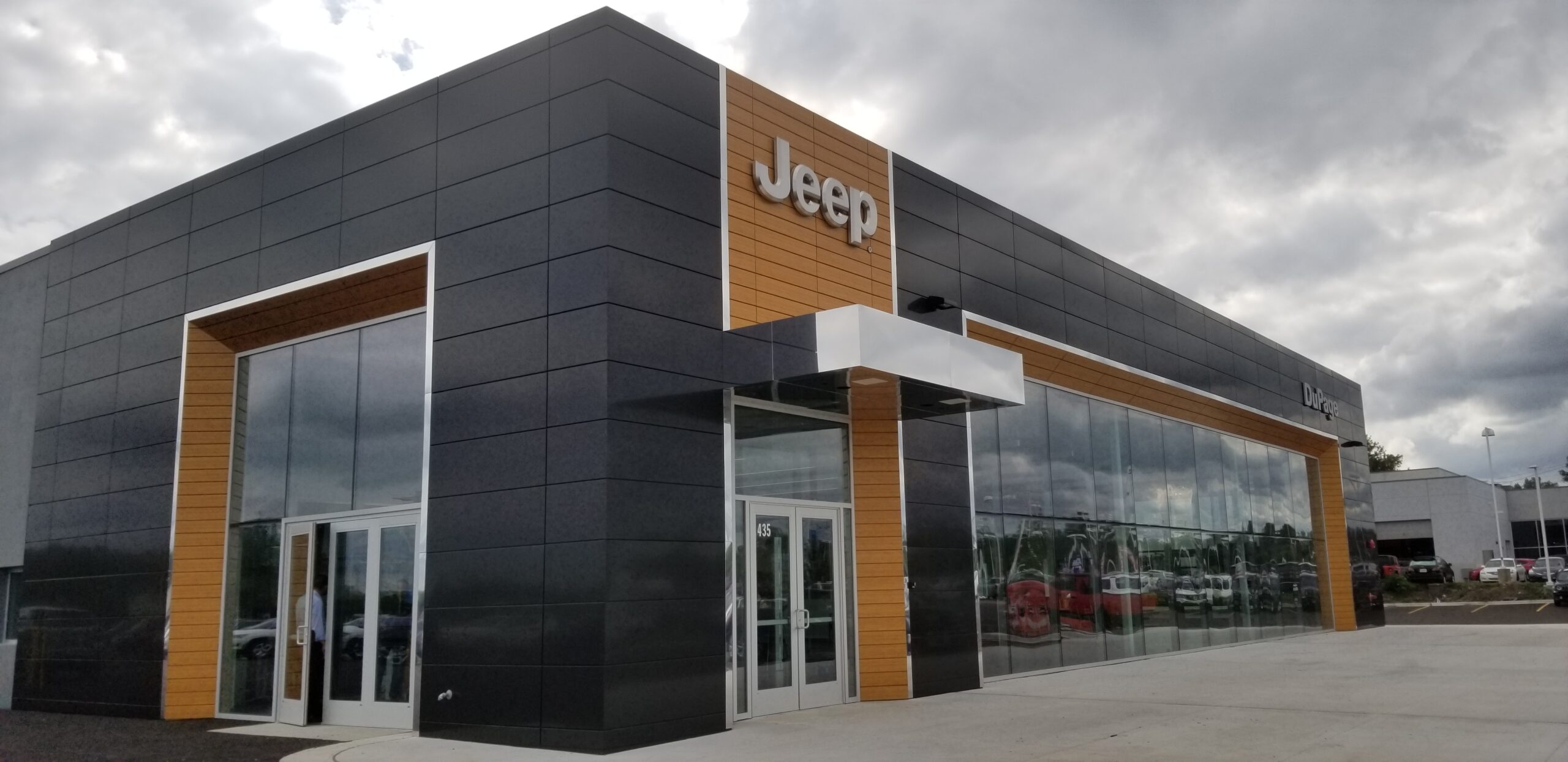

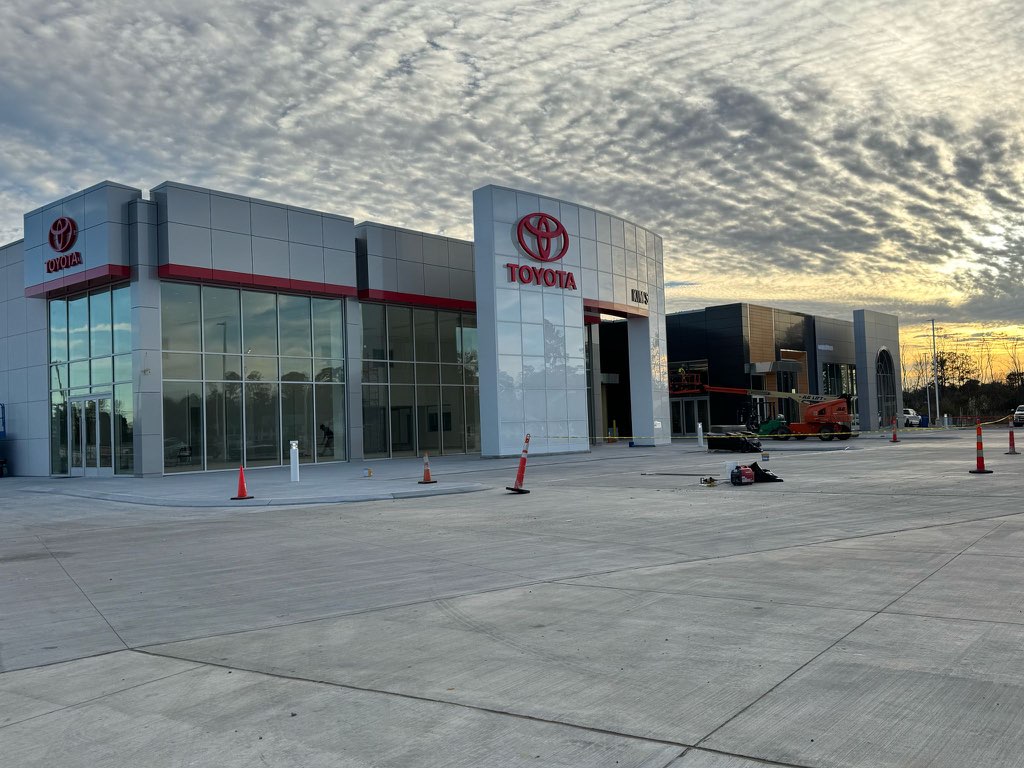
In brake metal—and especially in architectural envelope components—precision isn’t optional: it’s the difference between a flawless façade and $10K+ in rework. A simple miscalculation of 1/8″ (3 mm) seems trivial, but by the time dimensional stacking, misalignment, and weather seals get affected, the costs spiral.
1. Dimensional Stacking Errors
Each notch, flange, and return adds tolerance. With five bends at even ±1/32″ variance, you end up ±5/32″ off. This misalignment destroys everything from panels to fastener alignment—requiring either field modifications or complete re-fabrication.
2. Envelope Failure Risks
Leaks and deflection cracks often trace back to compounding fit issues. Misaligned edges can’t accept sealants properly, leading to water infiltration or thermal inefficiencies.
3. Material Waste and Re‑fabrication Costs
Reworking means grinding welds, re-bending or welding new pieces—easily blowing through both time and budget. Shop labor runs $75–120/hour, field labor $120–200/hr, plus materials and logistics. One botched fascia can run hundreds to thousands in scrap and labor.
4. Press Brake Mechanics & Precision
Modern press brakes—with CNC, laser back gauges, and crowning systems—can hold tolerances of ±0.1° and ±0.05 mm positioning precision mahsteel.commachinerfq.com. But without calibration and proper tooling, accuracy drops—and springback undershoots the target.
5. Role of Tooling & Springback Compensation
Dies and punches must be custom to material properties: thickness, yield strength, hardness. Springback compensation in CNC ensures final bend angles match spec huxleydesign.com+2abrahamsteel.ca+2machinerfq.com+2. Without it, you risk repeated field fits.
6. Common Errors & Avoidance
- Inconsistent angles: Manual bending yields variation; automated brake forming remedies that abrahamsteel.ca.
- Cracking: Due to wrong radius or tonnage. Proper tooling avoids this.
- Millimeter-level misplacement: Even small gauge off measurements destroy envelope fit.
7. Cost of Calibration Failure
Uncalibrated back-gauges lead to 0.1 mm error per bend—over 10 bends that’s 1 mm total shift. When panel size is 12 ft, that could be several inches off on final assembly. Punch replacement (worn tooling) also contributes.
Practical Best Practices
- Material-Specific Tooling: Match die radius and tonnage for the alloy and thickness.
- Regular Calibration: Monthly calibration of back-gauges and crowning keeps errors in check tripointfab.com+15machinerfq.com+15abrahamsteel.ca+15mac-tech.com+1cdn.thomasnet.com+1.
- Initial Test Batches: Use sample coupons to validate bends before full production.
- CNC Compensation: Beam crowning and angle feedback systems offset inaccuracies machinerfq.com.
- Digital Templates: CAD-driven setups reduce manual error and streamline tooling changes.
Summary: Every 1/8″ Can Cost You BIG
- Dimensional error ➝ misaligned envelopes ➝ site rework
- Springback unaccounted ➝ angle deviation ➝ fit failure
- Inadequate tooling/calibration ➝ cracks/dents ➝ scrap or scrap + rework
The result? A single misfit piece in your ACM or sheet metal envelope can cascade into thousands in delays, labor, and re-manufacturing. That’s why accuracy in press brake work isn’t a cost—it’s a risk mitigation investment.
Ready for Precision?
Don’t risk costly rework on your next architectural panel or sheet‑metal project. Visit www.gofabllc.com to quote your next ACM or sheet‑metal project, or call (228) 282‑5575 today—because when it comes to brake metal, every fraction of an inch counts.